
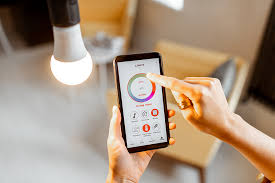
Smart lighting helps lower energy bills by using more efficient bulbs and intelligent controls that reduce wasted electricity. This system adjusts lights automatically or on demand, preventing lights from being on when not needed and using less power overall.
Understanding Smart Lighting and Your Energy Bills
Smart lighting is more than just a buzzword. It’s a way to control your home’s lights using technology. Think of it as giving your lights a brain.
You can turn them on or off. You can dim them. You can even change their color.
All this can be done from your phone or with your voice. It’s a big step up from simple light switches.
Why does this matter for your bills? Because traditional lights can waste a lot of energy. Old incandescent bulbs, for example, get hot.
Much of the energy they use turns into heat, not light. This is energy that your electricity company charges you for. Smart lighting often uses LED bulbs.
LEDs are much better at turning electricity into light. They use far less power.
Beyond just the bulb type, smart lighting offers control. You can set schedules. Lights can turn on when you wake up.
They can dim down in the evening. They can even turn off when you leave a room. This is key to saving money.
It means you aren’t paying to light up empty spaces. Every little bit of saved energy adds up. Over time, this makes a real difference on your monthly bill.
The initial cost of smart lighting might seem higher. But many people find that the energy savings pay for themselves. It’s an investment in a more efficient home.
And it makes your home more comfortable and convenient too. It feels good to know your home is helping you save money without you even thinking about it.
The Core Technology: How Smart Lights Work
At its heart, smart lighting uses a network. This network connects your lights to a control system. Most often, this system is your smartphone or a smart home hub.
The lights themselves are usually LED bulbs. These bulbs have built-in technology. This technology lets them communicate wirelessly.
The most common ways they talk are via Wi-Fi or Bluetooth. Some systems use a special low-power radio frequency called Zigbee or Z-Wave. These frequencies are good for home networks.
They don’t use up your Wi-Fi bandwidth. They are also very reliable for sending simple commands like “turn on” or “dim to 50%.”
You might have smart bulbs that screw into existing sockets. Or you could have smart switches that
The control system is what makes it “smart.” An app on your phone lets you group lights together. You can control a whole room at once. You can create “scenes.” A scene might be “Movie Night.” This could dim the living room lights to a soft glow.
Another scene could be “Good Morning.” This might gradually brighten your bedroom lights.
Voice control is also a big part of it. If you have a smart speaker like Alexa or Google Assistant, you can just speak your commands. “Hey Google, turn off the kitchen lights.” It’s very simple and quick.
This ease of use is what makes people actually use the smart features. And using the features is how you save energy.
So, the technology involves smart bulbs or devices, a wireless communication method, and a control interface. Together, they give you a new level of command over your home’s lighting. This command directly translates into better energy management and lower bills.
My Own “Duh” Moment with Lighting Waste
I remember one evening, I was working late on a project. My office was in the basement. I had a bright overhead light on.
I also had a desk lamp. And then, the hallway light upstairs was on. My kids had gone to bed hours ago.
My partner was reading in the living room, which had its own lamp. So, essentially, I had three lights on upstairs, plus my office lights, all burning energy while the rest of the house was quiet.
I was tired. I just wanted to finish my work. The thought of getting up to turn off each light seemed like too much effort.
It felt like a small thing. But later that week, I got my electricity bill. It was higher than I expected.
I started going through it. I couldn’t pinpoint one huge reason. Then I thought about my late-night work sessions.
I thought about lights left on in empty rooms.
That was the moment I realized how much energy we were just giving away. It wasn’t that I was intentionally wasting it. It was just convenience, or maybe a bit of forgetfulness.
The sheer number of bulbs I had on during those times was eye-opening. I started making a conscious effort to walk around and turn off lights. But I’d still forget sometimes.
Or I’d be too far away from a switch.
It made me really look into smarter solutions. I wanted something that would help me, even when I wasn’t actively thinking about it. Something that would make it easy to save energy.
That’s when I really dug into smart lighting. It seemed like the perfect answer to my “lazy energy waste” problem. It promised to automate the savings.
And it actually delivered.
Smart Bulb Energy Savings: A Quick Look
LED vs. Incandescent:
- LEDs: Use up to 80% less energy. Last 25 times longer.
- Incandescent: Use a lot of energy. Burn out quickly.
Smart Control Benefits:
- Dimming: Lowering brightness saves energy.
- Scheduling: Lights off when not needed.
- Motion Sensors: Lights turn off automatically.
Real-World Scenarios: Smart Lighting in Action
Let’s think about different parts of your home. In the living room, you might want soft, warm light for relaxing. You can set a “Relax” scene.
This dims the main lights and turns on a cozy lamp. When you leave, you can use your app or voice command to turn them all off. No more forgetting.
In the kitchen, you might need bright light for cooking. But when you’re just grabbing a snack late at night, you don’t need the full glare. A smart system can let you set different brightness levels.
You could have a “Night Light” scene for the kitchen that uses very little power. Or motion-sensor lights can turn on dimly when you enter and then turn off after a few minutes.
Bedrooms are another great place. Imagine waking up gently. Instead of a jarring alarm, your bedroom lights slowly get brighter.
This mimics a sunrise. It’s much more pleasant. Then, when you leave for the day, you can ensure all the bedroom lights are off.
This prevents energy waste throughout the day.
Hallways and staircases are often lit unnecessarily. People leave them on “just in case.” Smart lighting with motion sensors is perfect here. A light turns on only when someone walks by.
It stays on for a short time. This is much more efficient than a light that’s always on. It also adds a touch of modern convenience.
Think about your outdoor lights. Security lights that are on all night use power. Smart outdoor lights can be set to turn on at dusk and off at dawn.
Or they can be motion-activated. This is safer and saves energy. You can even have smart floodlights that only turn on if they detect movement.
This is a good deterrent for unwanted visitors.
For areas you don’t use often, like a guest room or a storage closet, smart bulbs are great. You can easily turn them off from anywhere. If you’re like me, you might wonder, “Did I leave that closet light on?” With smart lighting, you can check your app and turn it off if needed.
This peace of mind is valuable.
Smart Lighting Setup Options
Smart Bulbs
Screw into existing fixtures. Easy to install. Can be controlled individually or in groups.
Smart Switches
Replace your existing switches. Control multiple lights on a circuit. Can be wired into your home’s network.
Smart Plugs
Turn any lamp or device into a smart device. Plug into the outlet, then plug your device into the smart plug.
Smart Fixtures
Integrated smart lighting solutions. Often offer advanced features. More complex to install.
What This Means for Your Wallet
The most direct impact of smart lighting is on your electricity bill. When you use LED bulbs, you’re already saving energy. A typical 60-watt incandescent bulb uses about 60 watts.
A comparable LED bulb uses only about 10 watts. That’s a huge difference.
Now, add the smart controls. If lights are set to turn off automatically when no one is in the room, you’re saving even more. If you schedule lights to dim in the evening, you use less electricity.
These are not small savings. Over a year, they can add up to tens or even hundreds of dollars.
Consider the lifespan of bulbs. LED bulbs last much longer than old incandescent ones. This means you buy replacement bulbs less often.
While smart bulbs might have a higher upfront cost, their longevity and energy savings make them more cost-effective in the long run. You’re investing less in ongoing purchases and electricity usage.
Some smart lighting systems also offer energy monitoring. You can see exactly how much electricity your lights are using. This data can help you identify areas where you can save more.
You might see that a particular area is using more power than you thought. Then you can adjust its settings or schedule.
The convenience factor also plays a role. If it’s easy to turn off lights, you’re more likely to do it. Smart lighting removes the hassle.
You don’t have to walk across the house to flip a switch. This makes saving energy a seamless part of your daily routine. When saving money becomes easy, you’re more likely to stick with it.
It’s also about reducing your carbon footprint. Using less electricity means less strain on power grids. It often means fewer fossil fuels burned.
So, saving money on your bills also means you’re doing a little bit more for the environment. This dual benefit makes smart lighting a smart choice for many households.
Myth vs. Reality: Smart Lighting Savings
Myth: Smart lighting is too expensive.
Reality: While upfront costs can be higher, long-term savings on energy and bulb replacements often outweigh the initial investment.
Myth: Setting up smart lighting is complicated.
Reality: Many smart bulbs and plugs are plug-and-play. Smart switches are also straightforward for DIYers or simple professional installs.
Myth: You need a whole new home system.
Reality: You can start with just a few smart bulbs or plugs in key areas and expand as you see the benefits.
Myth: The energy savings are insignificant.
Reality: LEDs alone save significant energy. Smart controls that prevent lights from being on when not needed add even more substantial savings over time.
When Smart Lighting is a Clear Win
If you often find yourself asking, “Did I leave the lights on?” smart lighting is a great solution. It gives you the power to check and control lights remotely. This peace of mind is valuable.
Homes with many rooms or large spaces can benefit hugely. It can be hard to keep track of all the lights. Smart systems make it easy to manage them all from one place.
This is especially true for families with busy schedules.
If you are looking for ways to reduce your home’s energy consumption, smart lighting is a practical step. It addresses a significant source of household energy use. The savings are measurable and consistent.
For those interested in home automation, smart lighting is often a starting point. It’s relatively easy to install and use. It offers immediate benefits in terms of convenience and cost savings.
It can then be expanded to other smart home features.
If you live in an area with high electricity rates, the savings from smart lighting will be even more noticeable. The payback period for the investment will be shorter.
Finally, if you simply want to make your home more modern and efficient, smart lighting is a great upgrade. It adds a touch of technology that can make daily life a bit easier and more enjoyable.
Quick Tips for Smart Lighting Savings
Tip 1: Use Schedules Wisely
Set lights to turn off automatically when you typically leave the house or go to bed.
Tip 2: Dim for Ambiance (and Savings)
Lowering brightness by even 25% can save a good amount of energy. Plus, it creates a cozy atmosphere.
Tip 3: Motion Sensors in Key Areas
Install motion sensors in hallways, closets, and bathrooms where lights might be left on accidentally.
Tip 4: Group Lights Effectively
Create groups for rooms or zones. This allows you to control multiple lights at once with a single command.
Tip 5: Leverage Voice Control
When your hands are full or you’re comfortable, voice commands are the easiest way to turn lights on or off, saving you steps and hassle.
When to Be a Little More Careful
While smart lighting is generally very safe, there are a few things to consider. For some people, especially those who are not tech-savvy, the initial setup might feel a bit overwhelming. Reading instructions carefully and starting with a simple setup can help.
If you have older home wiring, it’s always a good idea to have an electrician check compatibility before installing smart switches. Most modern wiring is fine, but older systems might need an upgrade for safety.
Also, remember that smart devices rely on your home’s Wi-Fi network. If your internet connection is spotty, your smart lights might not respond as quickly. A strong Wi-Fi signal throughout your home is important for best performance.
For critical areas like emergency exits or hallways that need consistent light for safety, ensure you have a reliable backup plan or consider traditional, always-on lighting if smart system failure is a major concern. However, for most standard home use, the reliability of modern smart systems is very high.
The cost can be a barrier for some. While savings are real, the upfront investment for a whole-house system might be too much for a tight budget. It’s perfectly fine to start small.
Get a few smart bulbs and see how you like them before committing to more.
And finally, the “smart” aspect relies on power. If your home loses power, your smart lights will go out, just like regular lights. Some systems might retain their last setting, but they won’t be controllable until power is restored.
Smart Lighting vs. Traditional Lighting: A Quick Scan
| Feature | Traditional Lighting | Smart Lighting |
|---|---|---|
| Energy Efficiency | Often uses less efficient bulbs (incandescent) | Typically uses highly efficient LEDs |
| Control | Manual on/off switch | App, voice, schedules, motion sensors, remote access |
| Flexibility | Fixed brightness and on/off | Adjustable brightness, color, scenes |
| Cost (Upfront) | Low | Higher |
| Cost (Long-term) | Higher due to energy use and bulb replacement | Lower due to energy savings and bulb longevity |
| Convenience | Basic | High, with automation and remote control |
Frequently Asked Questions About Smart Lighting
How much money can smart lighting actually save on my electricity bill?
The amount varies based on your current lighting usage, electricity rates, and the specific smart lighting features you use. However, switching to LED bulbs alone can cut lighting energy use by up to 80%. Adding smart controls like scheduling and motion sensors can increase these savings further, potentially saving you tens to hundreds of dollars per year.
Do I need a special hub for smart lighting to work?
Not always. Some smart bulbs connect directly to your home’s Wi-Fi network and can be controlled via an app. Other systems, especially those using Zigbee or Z-Wave, might require a separate smart home hub to communicate with your router and devices.
Many smart speaker systems (like Amazon Echo or Google Home) can also act as a hub.
Can I use smart bulbs with my existing dimmer switches?
Generally, you should not use smart bulbs with traditional dimmer switches. Smart bulbs have their own dimming capabilities built-in. Using them with a dimmer switch can damage the bulb or the dimmer, and it often leads to flickering or incorrect operation.
If you want dimming, use smart bulbs with a standard on/off switch or a compatible smart dimmer switch designed for LEDs.
What happens if my Wi-Fi goes out? Can I still use my smart lights?
This depends on the system. Many smart bulbs will revert to a basic on/off function when controlled by the physical light switch. Some systems allow for local control without an internet connection, meaning they can still be controlled via an app on your local network.
However, remote access and advanced scheduling might not work until your Wi-Fi is restored.
Are smart bulbs safe to use in bathrooms or kitchens where moisture is present?
Yes, most smart LED bulbs are designed with safety and durability in mind. However, like any electrical device, they should not be placed where they can be directly exposed to water. For areas with high humidity, such as bathrooms, ensure the fixture is rated for damp or wet locations if applicable, and the bulb is installed correctly.
Always follow manufacturer guidelines.
Can I mix different brands of smart lights in my home?
It can be challenging. While some systems are designed to be compatible with others through platforms like Apple HomeKit, Google Home, or Amazon Alexa, mixing brands directly can sometimes lead to connection or functionality issues. It’s often recommended to stick with one ecosystem or brand for simpler management and better reliability, or at least ensure they are compatible with your chosen smart home platform.
Making Your Home Smarter, One Light at a Time
Smart lighting offers a compelling blend of convenience, comfort, and cost savings. By adopting more efficient LED technology and leveraging intelligent controls, you can significantly reduce your home’s energy waste. This not only lowers your monthly bills but also contributes to a more sustainable lifestyle.
It’s a simple yet powerful upgrade that makes your home work better for you, every single day.




Leave a Reply