
Last updated: October 29, 2026
Key Takeaways
- Home insulation usually comes down to four main types: fiberglass, cellulose, spray foam, and rigid foam board.
- The right insulation depends on the house section and the space shape.
- Fiberglass insulation is often the simplest fit for standard cavities, but it is not always the right answer.
- Blown-in insulation is often the easiest way to cover awkward spaces, which is why cellulose and loose-fill fiberglass are common in retrofits.
Home insulation works best when you match the material to the space, not when you pick the “best” product in the abstract. Types of home insulation explained means looking at fiberglass, cellulose, spray foam, and rigid foam board as different tools for different jobs. In short: fiberglass, cellulose, spray foam, and rigid foam board all do different jobs, and the right choice depends on whether you are insulating an attic floor, a wall cavity, a basement rim joist, or a flat roof.
If the goal is to compare types of home insulation without getting lost in brand names, start with where each material fits. That is the part most generic guides skip. A product can have a strong R-value on paper and still be the wrong answer if it cannot fit the cavity, block air movement, or survive moisture in that location. The practical question is not “which insulation is strongest?” It is “which insulation works here?” The U.S. Department of Energy notes that the right insulation depends on the climate, the house, and the location.
Home insulation is one of the core building blocks of home energy improvements. It reduces heat flow, but the way it does that changes by material: some trap still air in fibers, some fill gaps as loose particles, some expand to stop air movement, and some use rigid panels to add continuous coverage. The U.S. Energy Information Administration reports that space heating is the largest residential energy use, at about 42% of home energy consumption.
What the main types of home insulation actually do
The main types of home insulation are fiberglass, cellulose, spray foam, and rigid foam board, and each one solves a different problem.
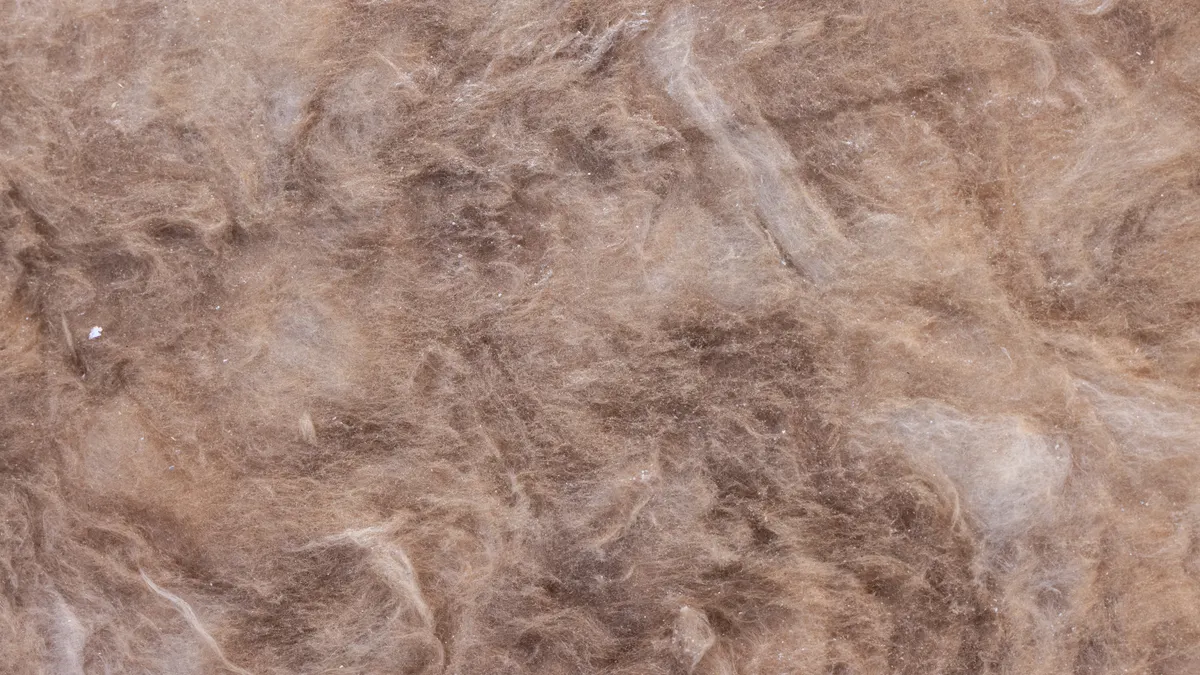
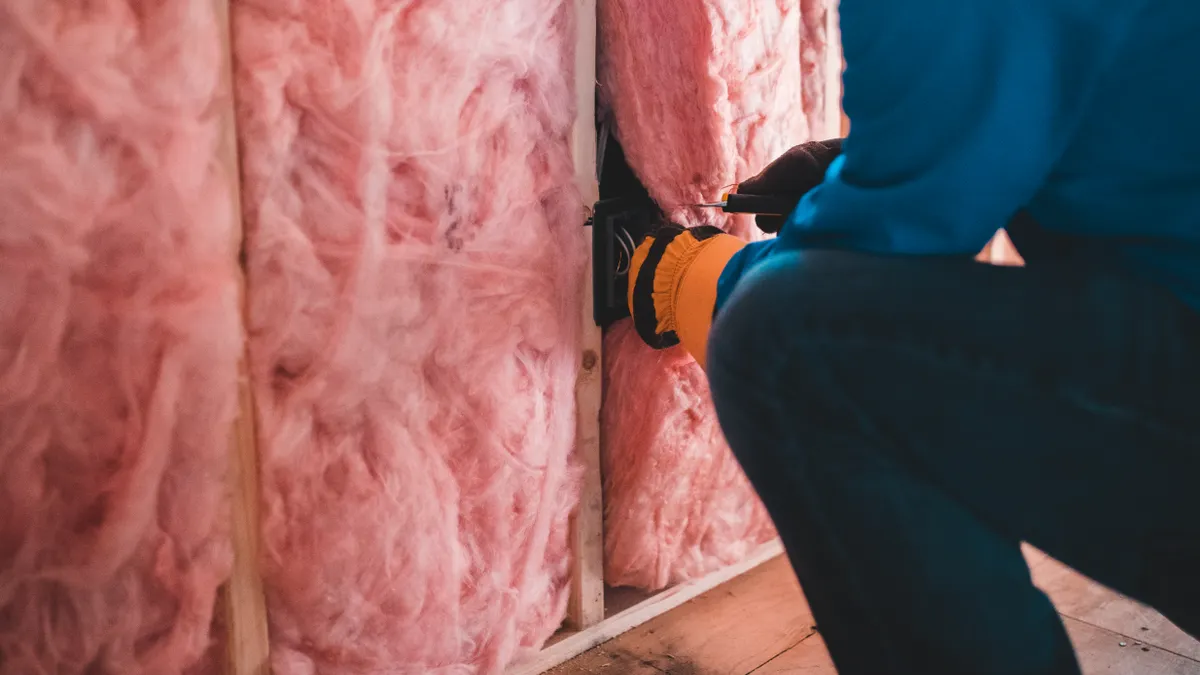
Fiberglass insulation is made of fine glass fibers. It comes as batts, rolls, or loose-fill. Batts are the familiar pink, yellow, or white blankets sized to fit standard framing bays, often 2×4 or 2×6 walls. Loose-fill fiberglass is blown in and works better where framing is irregular or access is limited.
Cellulose insulation is shredded fiber, usually installed as blown-in insulation. It is useful where you need the material to settle into odd-shaped spaces, especially attics and enclosed cavities. Because it is dense and fills voids well, it can cover around framing better than batts.
Spray foam insulation is a liquid that expands after installation. It comes in open-cell and closed-cell versions. Open-cell foam is lighter and softer. Closed-cell foam is denser, stronger, and more resistant to moisture. Spray foam does more than slow heat flow; it also helps reduce air leakage where it is applied.
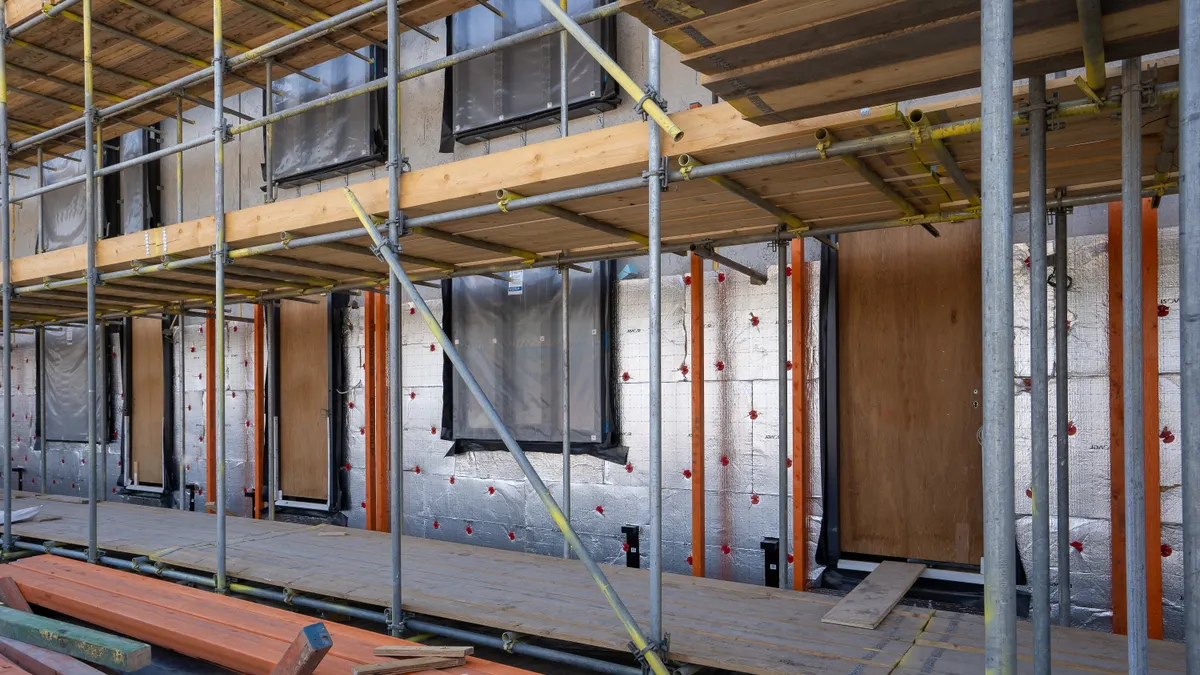
Rigid foam board is sold as hard panels of polystyrene, polyisocyanurate, or similar materials. It is not meant to drape through a wall cavity. It is used where a flat sheet can cover a surface continuously, such as basement walls, sheathing, or roof assemblies.
A useful shortcut: if the space is open and standard-sized, fiberglass often fits. If the space is irregular or needs better cavity fill, cellulose can fit well. If you need air sealing along with insulation, spray foam matters. If you need a continuous layer over a surface, rigid foam board is usually the tool.
Which insulation type fits each part of the house?
The best insulation type depends on the part of the house and the shape of the space.
Attics often use blown-in cellulose, loose-fill fiberglass, or fiberglass batts, depending on access and framing. Wall cavities in finished rooms commonly use fiberglass batts or blown-in insulation if the walls are being retrofitted. Rim joists and tricky edges often call for spray foam or rigid foam board, since those areas usually have many gaps and short runs. Continuous exterior insulation is a rigid foam board job, not a batt job.
Here is the practical rule: use batts where a cavity has a regular width, use blown-in material where the space is awkward or already enclosed, use spray foam where air sealing matters most, and use rigid foam board where you need a flat, continuous layer.
An ordered approach helps:
- Identify the location first: attic floor, wall cavity, basement wall, rim joist, or roof assembly. The same material can perform very differently in each place.
- Measure the cavity depth or available thickness. A 2×4 wall, a 2×6 wall, and a 1-inch rim joist are not interchangeable spaces.
- Match the product to the access. Batts need open framing. Blown-in insulation can be installed through small openings. Spray foam and rigid panels suit more specialized locations.
- Check whether the area needs air sealing as well as thermal resistance. Spray foam is the most obvious fit when both matter in the same spot.
- Compare the installed thickness against the product’s stated R-value per inch. That tells you whether the assembly can reach the performance you want without overstuffing the cavity.
This is where a lot of people go wrong: they buy insulation by label instead of by placement. A thick batt packed into a cavity can underperform if it is compressed. A rigid board can be excellent on a basement wall and nearly useless as a fill product in a stud bay. The material needs to match the geometry.
Fiberglass insulation: when batts make sense and when they do not
Fiberglass insulation is the simplest choice for standard cavities, but it is not a universal answer.
Fiberglass batts are best when the framing bays are regular and the installer can place them without compression or gaps. That makes them a common fit for unfinished walls, floors between joists, and some attic floor applications. They are also easy to inspect later, which matters in homes where future access might be needed.
The limitation is fit. Fiberglass works poorly when it is cut carelessly, stuffed behind wiring, or compressed into a cavity that is not the right depth. Compression reduces the benefit of the batt because the trapped air spaces get squeezed out. A batt that is nominally sized for a 3.5-inch wall should not be jammed into a shallow cavity and expected to perform the same way.
Fiberglass is also weak at stopping air movement on its own. It slows heat transfer, but it does not seal every gap. That is why it often performs best in assemblies that already have good air control, or where other materials address the leaks.
If the job is an attic with simple joists and lots of open access, fiberglass can be a practical material. If the job is a leaky rim joist, a narrow odd-shaped cavity, or a space full of obstacles, fiberglass batts are usually the wrong tool.
A good rule: use fiberglass when the space is predictable and the cut can be clean. Skip it when the cavity shape is messy enough that the batt would spend more time being forced into place than actually fitting.
Blown-in insulation: why loose fill changes the game
Blown-in insulation is often the easiest way to cover awkward spaces, and that is why cellulose and loose-fill fiberglass are so common in retrofits.
Loose fill works by flowing into cavities instead of trying to span them as a sheet. That makes it useful for attics with irregular joist spacing, walls that are being dense-packed through drilled holes, and spaces where a batt would leave voids around pipes, blocking, or braces. Cellulose is especially known for this use because it settles well and can pack around obstructions.
The advantage is coverage. The material can reach corners that a batt might miss. In an attic, blown-in insulation also helps create a more uniform layer over the ceiling plane. In walls, dense-pack cellulose can reduce empty pockets that often occur behind old framing.
The trade-off is control. Loose fill depends on proper depth, density, and coverage. If it is blown too lightly, it can settle unevenly. If it is installed where wind washing or air leakage is severe, the thermal result can drop. It also needs the right equipment, which is why many homeowners hire this work rather than trying to do it with a rental machine and guesswork. The Department of Energy and Building Science Corporation both discuss why installation quality matters for performance.
Blown-in insulation is not a clean substitute for every batt. It is strong where the space is irregular and access is limited. It is less compelling where you need a tidy surface or a material that also serves as a rigid air barrier. For those jobs, spray foam or rigid foam board may fit better.
For a reader choosing between cellulose and fiberglass, the deciding factor is usually not the name of the material. It is whether the space needs to be filled like a container or lined like a frame.
Spray foam insulation: where its extra cost buys a different result
Spray foam insulation is the right choice when the job needs insulation and air sealing in the same step.
Open-cell spray foam expands more and is lighter. Closed-cell spray foam is denser, more moisture resistant, and stronger. Both types are installed by spraying liquid components that expand in place. That expansion is the point: the foam can fill irregular gaps, seal edges, and adhere to framing.
This makes spray foam especially useful at rim joists, band joists, rooflines, and complicated transitions where a batt or loose fill cannot control air movement well enough. It is also used where space is tight and every inch counts. Closed-cell foam in particular can deliver useful thermal resistance in a thin layer, which matters in places with limited cavity depth.
The drawback is cost and application sensitivity. Spray foam is less forgiving than fiberglass or cellulose. It requires correct mixing, temperature control, and application thickness. If installed poorly, it can leave voids, pull away, or trap moisture in the wrong assembly. It is also harder to inspect after the fact because it becomes part of the structure.
This is the type that sounds like the answer to everything and is not. It can be too much for a standard wall where batts would do the job cleanly. It can also be the wrong choice in a place that needs future access or where the assembly is designed for vapor diffusion rather than a sealed layer.
If the issue is “I need the cavity filled,” spray foam may be more than you need. If the issue is “I need to stop air moving through this messy junction,” spray foam earns its place.
Rigid foam board: the flat-surface insulation people forget
Rigid foam board is the right fit when you need continuous insulation across a surface rather than fill in a cavity.
Rigid board comes in panels, not loose material. That makes it useful on basement walls, exterior sheathing, crawlspace walls, and roof assemblies where a flat layer can reduce thermal bridging. Unlike batts, it does not depend on cavity width. Unlike loose fill, it does not settle. Unlike spray foam, it does not expand into voids. It simply covers the surface in a predictable thickness.
That predictability is the selling point. A 1-inch or 2-inch board can be planned into an assembly in a way that a fluffy material cannot. It is often combined with other insulation types rather than used alone. For example, a wall may have fiberglass in the cavities and rigid foam as a continuous outer layer. That combination helps reduce the loss through studs and framing.
The limits are also clear. Rigid foam board does not fill a cavity by itself. Gaps at seams matter, so the boards need careful cutting and joint treatment. Consult a professional if you are unsure how to handle the seams, because the right source materials and installation details depend on the assembly. It can be awkward around irregular framing, electrical boxes, or lots of small protrusions. It also changes the wall thickness, which can affect trim, fasteners, and finishes.
Rigid foam board is not the material for a quick, sloppy install. It works best when the surface is planned, measured, and detailed. If the space is full of obstacles, another insulation type may be easier. If the space is broad and flat, rigid board can be one of the cleanest options.
For a deeper look at insulation assemblies, the Building Science Corporation and the U.S. Department of Energy both publish guidance worth reading. Building science resources explain how air control and vapor control affect performance, while the DOE’s insulation pages are a useful refresher on where different materials are commonly used.
How R-value should guide the choice, without misleading you
R-value tells you how well a material resists heat flow, but it does not tell you whether the material is the right fit for the space.
That is the key mistake people make. A higher R-value is not automatically better if the insulation cannot fit the cavity, stop air leakage, or survive the conditions where it is placed. A material with a lower R-value per inch can still outperform a “stronger” material in the wrong location if it seals better or covers more completely.
Use R-value as a filter, not a verdict. Start with the space, then the installation method, then the thickness available. A 2×4 wall has less room than a 2×6 wall. A rim joist has less room than either. An attic floor can usually accept much more depth than a wall cavity. That is why the same product can be excellent in one part of the house and poor in another.
The useful comparison is this:
- Fiberglass batts: good where a cavity has a standard depth and the fit will be clean.
- Blown-in cellulose or fiberglass: good where the space is irregular or access is limited.
- Spray foam: good where air sealing and thermal resistance need to happen together.
- Rigid foam board: good where a continuous flat layer matters more than cavity fill.
What this means in practice is simple: do not shop for insulation by R-value alone. Shop by assembly. The wall, attic, basement, or roof decides the material as much as the label on the package does.
The quickest way to choose the right insulation type
The quickest way to choose the right insulation type is to ask three questions: is the space open, is the shape regular, and does it also need air sealing?
If the answer is yes to open and regular, fiberglass batts are often the plainest option. If the answer is no to regular, blown-in cellulose or loose-fill fiberglass becomes more attractive. If the answer is yes to air sealing, spray foam deserves attention. If the answer is yes to continuous coverage over a flat surface, rigid foam board is usually the best match.
The wrong choice usually shows up as one of three problems: a batt that does not fit cleanly, a loose-fill product that was used where a sheet would have worked better, or a rigid board forced into a place full of obstructions. Those mistakes cost performance first and convenience second. A tidy-looking install still fails if the cavity is badly matched. A 2023 U.S. Department of Energy update on building envelope guidance still points readers back to fit and sealing, not just material choice.
Home insulation is not one product. It is a set of tools, and each tool has a shape it prefers. Once the reader starts from the space instead of the brochure, the decision gets much easier.
Which insulation type is best for attics?
The best insulation type for attics is often blown-in cellulose or loose-fill fiberglass because attic floors can usually take a deep, continuous layer.
Drafted with AI; not yet reviewed by a person.




Leave a Reply